
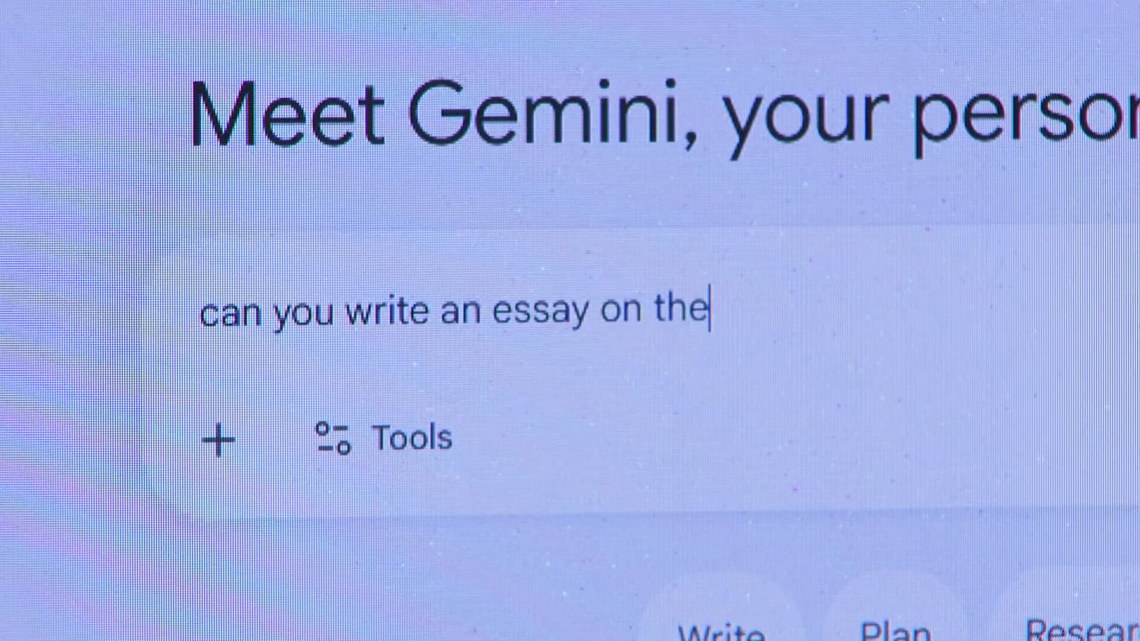
Approved tools include Gemini, NotebookLM and MagicSchool for student use.
DENVER — Denver Public Schools has begun allowing students to use a new set of artificial intelligence tools on school-issued devices, a shift that district leaders say reflects the growing presence of the technology in students’ lives, and an attempt to guide its use rather than restrict it.
In an email sent to staff this week, the district announced that, effective April 8, students can access platforms including MagicSchool, Google Gemini and NotebookLM. The district described artificial intelligence as “a tool that can support strategic and equitable teaching” and said its goal was to help students “think critically as well as gain knowledge in using AI in teaching and learning.”
District officials emphasized that the tools would be monitored and used within established safeguards. Billy Sayers, the district’s director of STEM, said the move was less about introducing artificial intelligence and more about responding to its widespread use among students.
“We wanted to get as many students off unapproved platforms and tools to approved tools that are contractually bound to protect our students’ data,” Sayers said. “We want to get ahead and pretty much set some pretty firm guardrails of what students are allowed to use and not allowed to use.”
Under the new system, the district is using what Sayers described as a “walled garden,” where student activity can be tracked through school accounts.
“We can actually monitor what they’re typing in there,” he said. “There are flags for self harm. We can see outputs, and so pretty much it is tied to their Google account.”
Amber Wilson, an English teacher at Thomas Jefferson High School with more than two decades of experience in Denver schools, said she learned about the change through the email on April 8, without any warning.
“I feel like releasing Gemini — just like, poof. Now the kids have Gemini. That’s a big thing,” Wilson said. “I wasn’t ready for it, and now it’s there.”
Wilson is not opposed to artificial intelligence. For the past two years, she has used MagicSchool, a platform that allows teachers to limit and guide how students interact with AI In her classroom, she uses tools like text levelers and summarizers to help students break down complex academic writing, while controlling how much information the system provides.
“I can program the tools not to give them too much information,” she said. “They have to eventually go out and read the article themselves so they can develop that critical thinking.”
She also teaches students how to use the technology responsibly, including how to refine prompts and recognize when the tool is doing too much of the work.
“What they do need to know is how to use the tools ethically, how to use it responsibly, and how to use it as just a tool that helps and not a bypass of the thinking or the learning that they actually need to do,” Wilson said.
The introduction of Gemini, she said, feels different.
Unlike MagicSchool, which allows teachers to shape and monitor student interactions in detail, she said Gemini appears broader and less customizable.
“I do worry about, you know, what guardrails have they put on Gemini,” said Wilson. “If the version that they’ve given the kids is the same one I have on my district computer, there were no guardrails there to keep it from writing a whole essay in two seconds.”
Her concerns reflect a challenge many educators say they are already facing: determining what work is truly a student’s.
“Teachers are spending hours going through papers trying to decide, is this real? Is this not?” Wilson said.
The district has tried to address those concerns by encouraging a more flexible approach to assignments. Sayers said teachers can define whether an assignment allows no AI use, limited use or more extensive use, depending on its purpose.
“Cheating is not as binary as it used to be,” he said, describing a shift toward conversations with students about how they used the tools rather than treating it as a simple violation.
The district has also been preparing teachers for the shift, offering multiple levels of training. According to Sayers, courses range from introductory “AI 101” sessions to more advanced “AI 201” trainings focused on integrating the technology into instruction. Additional sessions are tailored to specific tools, such as NotebookLM, and a new training on Gemini is expected to launch this summer.
While Wilson acknowledged that the district has made training available, she said it often requires teachers to seek it out on their own time.
“I know that the district is talking about they have trainings for teachers, but right now those trainings are very much like, go find it,” she said.
She added that without more structured support, the rollout risks leaving teachers to adapt on their own.
“That worries me, that it’s just going to appear on kids’ computers and people won’t know what to do with it,” she said.
District leaders say they plan to continue evaluating the impact of AI on student learning and adjust their approach as needed.
“We want students to learn. We want students to do well,” Sayers said. “If it doesn’t lead to improved student outcomes, we’ll be the first ones to say that we’ve got to find a better way.”