
[[{“value”:”
Subscribers only
A gentle frenzy swept through the annual World Robot Conference, held from Friday, August 8, to Tuesday, August 12, in Beijing, just ahead of the World Robot Games, taking place from Friday, August 15, to Sunday, August 17, inside Beijing’s National Stadium, which hosted the 2008 Olympic Games. As officials in shirt sleeves and black trousers strolled solemnly between the booths, hordes of schoolchildren in matching colors rushed toward the attractions.
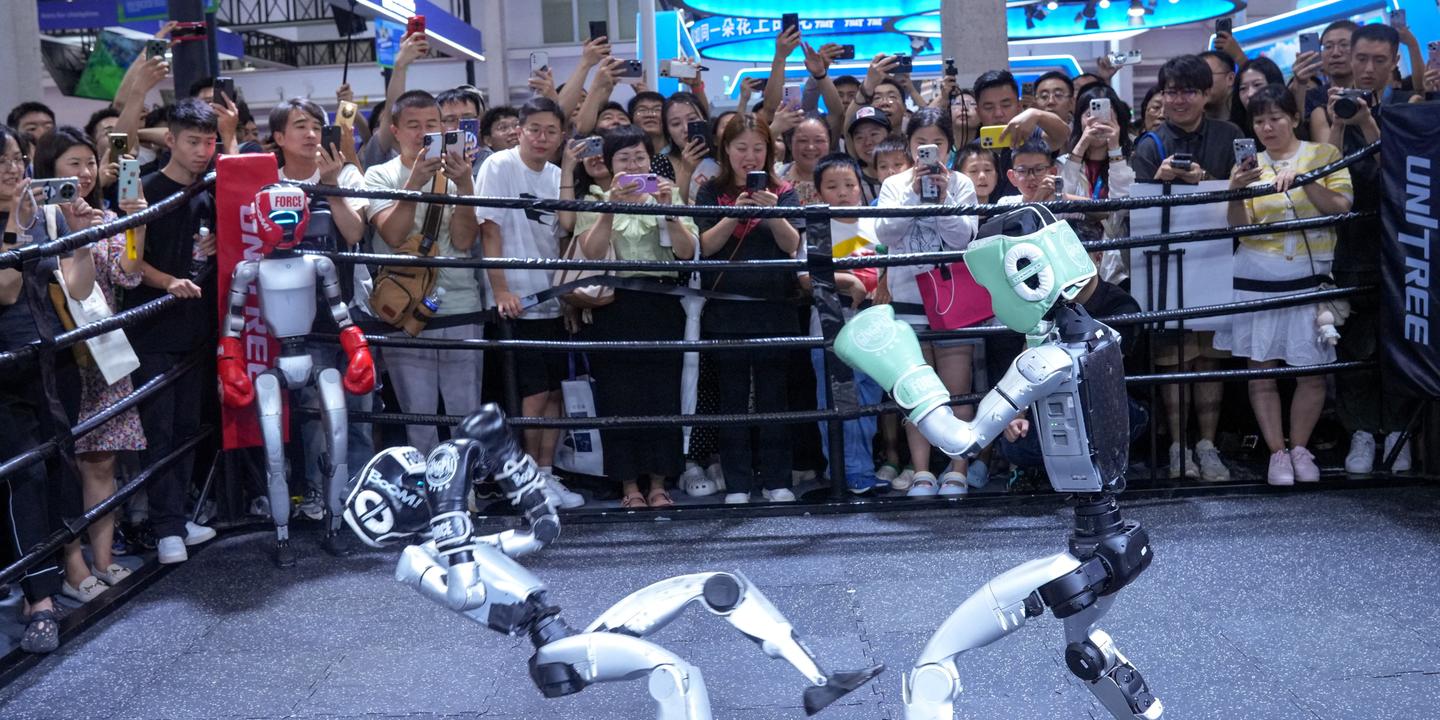
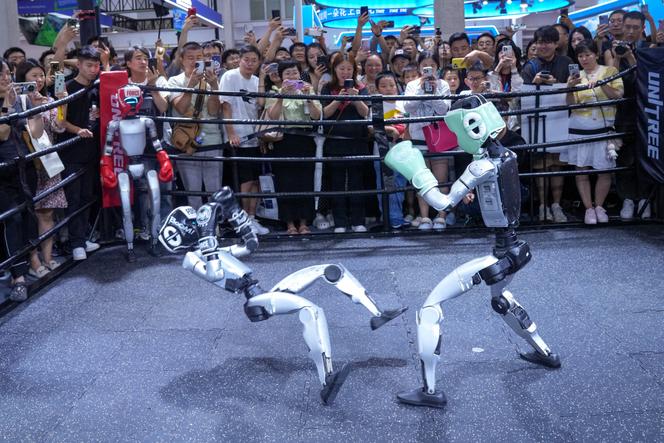
Here, a humanoid robot took penalty shots. Over there, two others faced off in a boxing match. Nearby, a hip-hop battle paired robots with professional dancers. Further on, LimX showcased its scale model of the AT-ST, the mechanical “chicken walker” from Star Wars. Called Tron 1, it sprang back up after every time the presenter kicked it. Its designers currently envision it for “industrial exploration, education, training and academic research.”
Beyond entertainment, this major annual fair provides Chinese robotics players a rare platform to attract public and private investors, potential customers and young talent. In just a few years – and thanks to the Made in China 2025 plan, launched in 2015 to turn China into a high-tech manufacturing powerhouse – the nation’s robotics industry has become one of the world’s most dynamic.
You have 86.61% of this article left to read. The rest is for subscribers only.
Subscribe to continue reading.
Get unlimited access to Le Monde in English
€3.99/month, cancel anytime
Already a subscriber? Sign in
“}]]